According to the Cambridge Dictionary, Valentine’s Day is the occasion
“when people give small presents, chocolate candy, flowers, or cards to
someone they admire or love.” Over the years, it’s become a major
commercial occasion. Every year, merchandise sales and restaurant
reservations shoot through the roof as we strive to find meaningful and
appropriate gifts for those special people in our lives who we love.
But you may be surprised to learn that the person for whom the day is
named – Valentine – was not known for being a romantic. Rather, it was his
love of God that set him apart, and that eventually caused the church to
canonize him as a saint.
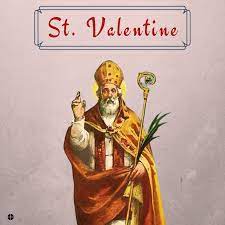
Indeed, the Valentine who inspired this special day was a 3rd-century
Christian priest who lived at a time when the Roman Empire ruled the
Mediterranean world. Like everyone who lived under the imperial yoke, he
was expected to demonstrate his loyalty to the Emperor by offering regular
sacrifices to the many gods who the Romans worshipped. But he refused
to do so. Valentine said that, as a follower of Jesus, he’d only worship the
Christian God and would never pay homage to any other deity. In the eyes of Rome this made Valentine a traitor – so he was arrested, convicted, andexecuted on February 14.
Over time, other stories about Valentine began to spread. According to one legend, Valentine became close to his jailor, who eventually asked him to prove Christ’s power by healing his blind daughter. Valentine did so – the jailor and his family then converted to Christianity – and just before he was
executed, he wrote a note to the daughter, which he signed, “your Valentine.” Hence the tradition of Valentine’s cards.
Other stories connected him more directly with romantic love. Valentine had apparently been marrying soldiers and their lovers at a time when the Roman Emperor had banned marriage for young men, believing that unmarried soldiers made better fighters. Valentine’s decision to perform
these marriages in secret was seen as an act of defiance against the Emperor’s edict. But it did much to seal his reputation as someone who fostered and encouraged loving relationships.

Truth be told, it’s difficult to separate fact from fiction when it comes to Saint Valentine. But what is clear is that his heart was filled with a special and powerful type of love that was focused on worshipping God and caring for those who he encountered. It’s the type of love Jesus describes in his famous “sermon on the plain” that we’ll focus on this Sunday. And it’s the love that we are invited to share with one another and the world.
P.S. A reminder that the deadline for submissions to the UCW’s book of
“Mothers Stories” is this Sunday, February 16. It’s a great way to
remember and give thanks for the love given by a mother, or by someone
who was as a mother to us.

 stmarksunited.ca