Search

Ian’s Inklings – February 20

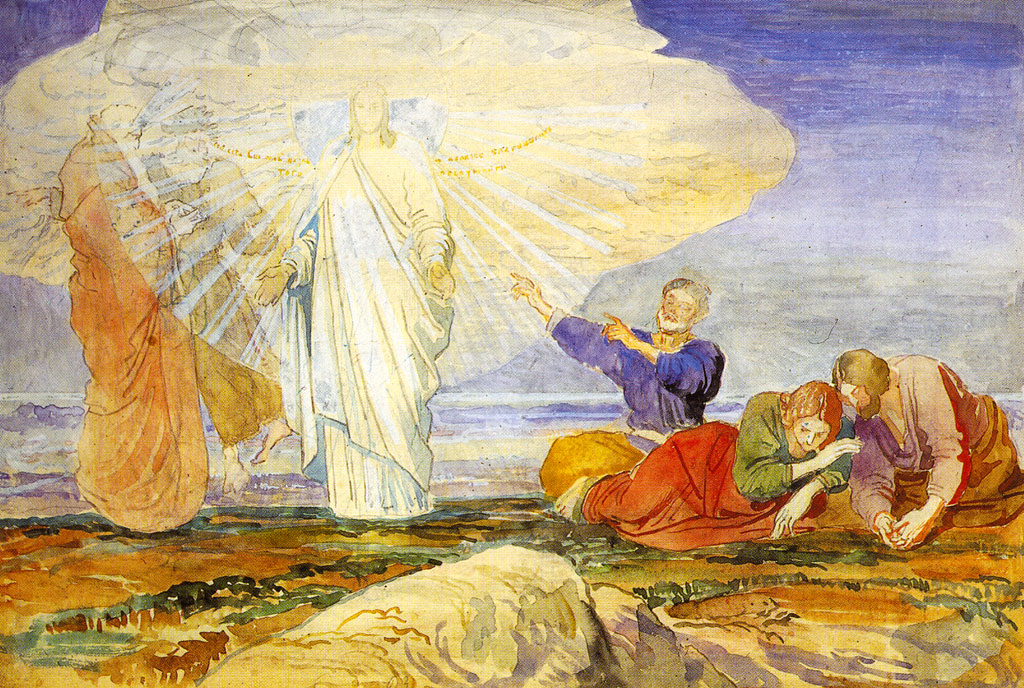
Occasionally I come across a Biblical text that I really don’t want to preach on.  And this week’s suggested reading from Luke’s gospel is one such passage.  “I say to you, Love your enemies, do good to those who hate you, bless those who curse you, and pray for those who abuse you,” Jesus said.  “If anyone strikes you on the cheek, offer the other also; and from anyone who takes away your coat do not withhold even your shirt… Do to others as you would have them do to you.”  

To say the least, I find these to be challenging words, even at the best of times – and these are hardly “the best of times.”  Donald Trump’s plans to impose strict tariffs on all Canadian goods entering the U.S. and to try to turn Canada into “the 51st State” threaten our economy, our values, and our independence. 

Consequently, many of us are coming to view the United States as an “enemy” that “hates” us.  So we’ve become angry.  We feel threatened.  And we’re fighting back.

Given our situation, Jesus’ words seem strange and perhaps even dangerous.  Therefore I’ve been sorely tempted to ignore them and find another text that seems more suitable (the story of David killing Goliath, perhaps?)  But one of the reasons preachers like me follow the Revised Common Lectionary (a three-year cycle of Biblical texts for every Sunday) is that doing so forces us to wrestle with texts we’d rather avoid.  So that’s what we’re going to do this coming Sunday.  What did Jesus mean when he said “love your enemies” and “do good to those who hate you?”  Can these challenging words help us navigate the turbulent waters we now find ourselves in? And if so, how?

I look forward to seeing you this coming Sunday morning at 10:30 am. 

Ian’s Inklings – February 14

According to the Cambridge Dictionary, Valentine’s Day is the occasion
“when people give small presents, chocolate candy, flowers, or cards to
someone they admire or love.” Over the years, it’s become a major
commercial occasion. Every year, merchandise sales and restaurant
reservations shoot through the roof as we strive to find meaningful and
appropriate gifts for those special people in our lives who we love.
But you may be surprised to learn that the person for whom the day is
named – Valentine – was not known for being a romantic. Rather, it was his
love of God that set him apart, and that eventually caused the church to
canonize him as a saint.

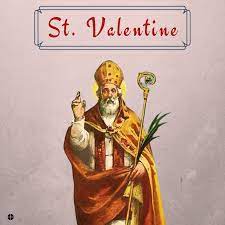
Indeed, the Valentine who inspired this special day was a 3rd-century
Christian priest who lived at a time when the Roman Empire ruled the
Mediterranean world. Like everyone who lived under the imperial yoke, he
was expected to demonstrate his loyalty to the Emperor by offering regular
sacrifices to the many gods who the Romans worshipped. But he refused
to do so. Valentine said that, as a follower of Jesus, he’d only worship the
Christian God and would never pay homage to any other deity. In the eyes of Rome this made Valentine a traitor – so he was arrested, convicted, andexecuted on February 14.

Over time, other stories about Valentine began to spread. According to one legend, Valentine became close to his jailor, who eventually asked him to prove Christ’s power by healing his blind daughter. Valentine did so – the jailor and his family then converted to Christianity – and just before he was
executed, he wrote a note to the daughter, which he signed, “your Valentine.” Hence the tradition of Valentine’s cards.

Other stories connected him more directly with romantic love. Valentine had apparently been marrying soldiers and their lovers at a time when the Roman Emperor had banned marriage for young men, believing that unmarried soldiers made better fighters. Valentine’s decision to perform
these marriages in secret was seen as an act of defiance against the Emperor’s edict. But it did much to seal his reputation as someone who fostered and encouraged loving relationships.

Truth be told, it’s difficult to separate fact from fiction when it comes to Saint Valentine. But what is clear is that his heart was filled with a special and powerful type of love that was focused on worshipping God and caring for those who he encountered. It’s the type of love Jesus describes in his famous “sermon on the plain” that we’ll focus on this Sunday. And it’s the love that we are invited to share with one another and the world.
P.S. A reminder that the deadline for submissions to the UCW’s book of
“Mothers Stories” is this Sunday, February 16. It’s a great way to
remember and give thanks for the love given by a mother, or by someone
who was as a mother to us.

Ian’s Inklings – February 6

In a recent Facebook post, former United Church Moderator Richard Bott

perceptively summarizes how President Donald Trump is working “to
consolidate the authority and power of their three branches of government
into the Executive branch – and into the person of himself.” He’s doing so in
many ways, including:

  • Granting special favours to media outlets and personalities who support his policies
  • Pardoning his supporters who illegally stormed the Capital building early in
    2021
  • Requiring public servant to pledge their loyalty to him rather than to the
    U.S. constitution
  • Deciding that two of his country’s closest economic partners and allies,
    Canada and Mexico, are now America’s enemies.
    In these and other ways, President Trump is working “to inflame U.S.
    citizens, to make them believe that they are under attack, and that any pain
    they have to endure will only be short-term, and will ‘Make America Great
    Again.’”
    Because of these and other recent initiatives, Richard admits that “I am
    afraid.”
    He asks: “How long until the American flag flies on Canadian
    territory, not as a salute to our neighbourly connection, but as obedience
    and obeisance to empire?”
    He also wonders: “With all of the destructive
    power that is held in that one man’s hands, what will the world look like by
    the time he leaves this mortal coil?”
    I don’t know about you, but I too have
    these questions. I too fear for our future.
    Of course, fear isn’t new. Indeed, one of Jesus’ most frequent messages to
    his friends and followers was: “be not afraid.” And the lectionary reading
    for this coming Sunday describes a time when Jesus shared these
    important words with a fisherman named Simon. So this week we’ll talk
    about the relationship between fear and faith, and explore how the
    guidance that Jesus offered Simon can also give us courage, wisdom and
    hope. It’s a powerful and pertinent story, so I hope you’ll join us in worship
    on Sunday at 10:30 a.m. I look forward to seeing you then.

Ian’s Inkings for January 29, 2025

Not long ago, newspaper columnist Marsha Lederman received a note from a friend saying “she was sorry about the horror show” because “she knows I feel all of this evil so deeply.” “Thanks,” Marsha responded. But then she asked herself, “which particular horror show was she referring to? There
are so many options.” So, in a Globe & Mail Column entitled “From This Week’s News, You Can Choose Your Own Horror Show,” she identified a number of recent events that have left her deeply troubled. Her list included:
– The looming possibility that the Trump administration will impose 25-per- cent tariffs on Canada, beginning February 1.
– President Trump’s call for a ‘clean out’ of Gaza” and “about sending (or cleaning out) displaced Gazans to Jordan or Egypt, as if they were not actual human beings who longed to return to their homes (or the site of their homes) and rebuild their houses and lives.”
– And Elon Musk’s address at a rally of the far-right, anti-immigrant AfD party of Germany, shortly before the 80th anniversary of the liberation of Auschwitz, where he “urged them not to be ashamed of their country’s history.”Lederman’s list or horrors went on. So, she wondered, how do we cope?

There’s no easy answer. But Lederman has found inspiration in the words of Tova Friedman, an 86-year-old survivor of Auschwitz who spoke at the ceremony honouring the memory of the one million Jews who were slaughtered in that evil place. After recalling “an icy, windy day” when, as a six-year old, “I stood and watched helplessly as little girls from the nearby barrack were marched away, crying and shivering to the gas chamber,” Friedman shared some of the lessons she’d learned from those horrific days. “We have an obligation, not only to remember, which is very, very important. But also to warn and to teach that hatred only begets more hatred,” she said. “All of us must awaken our collective conscience to
transform this violence, anger, hatred and malignancy that has so powerfully gripped our society into a humane and just world, before these terrible, terrible negative forces will destroy us all.”

These powerful words remind me of the request Bishop Mariann Edgar Budde made to Donald Trump last week, and of the Jesus’ message to the people of Nazareth long ago. Such messages, alas, aren’t always welcome. But they are very important.
I look forward to seeing you this Sunday at St. Mark’s at 10:30 am.

Ian’s Inklings – January 24/2025

Earlier this week, the sermon preached by Episcopal Bishop Mariann
Edgar Budde at Tuesday’s National Cathedral prayer service elicited a
storm of controversy. And President Trump seemed to have been
especially troubled by her plea that he “have mercy upon” the nation’s
immigrants, especially on families who were fearing deportation and fleeing
war and persecution. Referencing Trump’s belief that God had saved him from assassination, Bishop Budde said, “You have felt the providential
hand of a loving God. In the name of our God, I ask you to have mercy upon the people in our country who are scared now.” Her message appears to have fallen on deaf ears. Indeed, the President called her
words “nasty” and “inappropriate,” and demanded that she issue an apology.

Like it or not, the Bible is filled with words and messages that aren’t always easy to hear. And Trump’s reaction caused me to wonder how many times the word “mercy” appears in the Bible. It turns out that the answer is 339 – 296 references are found in the Old Testament, and 43 in the New. What’s more, calls to be kind, compassionate, merciful and just appear far more frequently. – including in the suggested lectionary text for this coming Sunday (Luke 4: 14-21). Here, Luke describes Jesus’ first sermon in the synagogue in Nazareth, and it’s filled with words that are strikingly similar to those uttered by Bishop Budde on Tuesday. So we’ll reflect on what it might mean to take Christ’s message of long ago seriously, and what some of the implications can be for us and the world.
I look forward to seeing you on Sunday at 10:30 am.

Ian’s Inklings – January 16, 2025

I recently read an insightful blog written by Tim Cotton, a retired police
officer from Maine. In it, he comments on how it’s sometimes easier to
walk away from someone who has a problem than it is to try and offer help.

This can happen at school, in workplaces, and even among family and
friends – and when it does, some people get left behind. What’s more, it’s often the people who stand on the sidelines and refuse to get their hands dirty who then turn around and criticize those who are struggling. “It’s human nature, I guess, because we’ve all thrown the stones, and we’ve been the recipient,” Cotton notes. “But it serves no purpose other than to break each other down incrementally, and sometimes worse.”

 Sadly, this phenomenon is far from new. Indeed, the Biblical story we’ll focus on this Sunday (the wedding feast at Cana) reveals that even Jesus had moments when he didn’t want to involve himself in someone else’s problem. So we’ll see how he dealt with this temptation, give thanks for those who lift us up rather than bring us down, and ponder what it can mean to step up to the plate and not walk away in times of need. It should be an interesting morning, and I really look forward to seeing you this
coming Sunday at 10:30 am.

Ian’s Inklings – January 9, 2025

Last Sunday morning, Grace Sheppard invited us to submit some stories about our mothers for inclusion in a book that the St. Mark’s UCW will be publishing in the spring. Her words promoted me to think a bit about my own mother, Dorothy Manson (nee McKay), and a couple of important lessons I learned from her. Mum was raised on a farm in southern Manitoba and went on to teach elementary school in Winnipeg. She loved what she did, but like all single women who taught back in the 40s and 50s, she had to give up her job when she got married. So she moved to the farm with my dad, I came along, and a new chapter began. But she’d lost an important piece of her identity. So once I started school, she began driving into Winnipeg a couple of evenings a week to take the university courses she needed to upgrade her credentials and return to the classroom. Doing so took courage and dedication. She’d been out of school for a long time so being a student again wasn’t easy – it took her several years of hard work to get her degree – and her home and farm responsibilities were also heavy.

Somehow she managed to juggle it all. And her efforts were rewarded when she was offered a tailor-made kindergarten position that gave her a number of happy and fulfilling years back in the classroom. Over the years, I learned much from my mother’s example – including the importance of “working hard and doing what you love.” And I’d hunch that all of us can also think of someone – be it a mother, grandmother or other important female figure – who’s taught us some important lessons. So I hope you’ll take the time to think about that special person and share some of the stories and memories you have of them. For if my experience of doing so is any indication, you’ll be glad you did.

Inklings – January 3, 2025

As the calendar turns to a new year, ideas abound about what we can do to bring health, joy and peace into our lives in 2025. Among other things, we’re encouraged to exercise more regularly, change our diet, and set some specific goals for the new year. These and other similar suggestions are well-meaning, and can indeed be helpful.

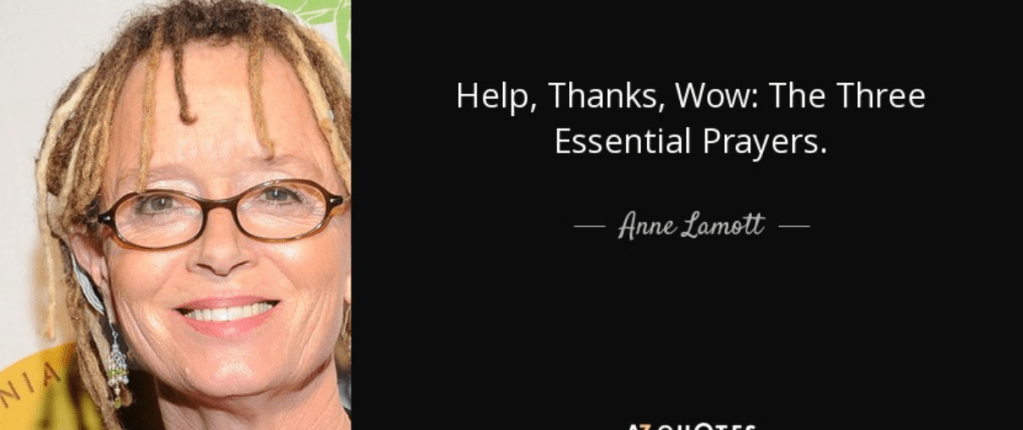
But one of my favourite writers, Anne Lamott, offers another suggestion. Take time to pray. And lest we find this to be a daunting prospect, Lamott reminds us that we only have to remember three simple words to do so: Help. Thanks. And Wow. For these three prayers address most every circumstance and need.
I believe she’s right. So as we begin another year at St. Mark’s, I hope we can remember to offer these three prayers whenever they may be appropriate. When challenges appear, we can ask God – and one another – for the help we need. When things are going well, we can offer thanks to the Creator and to those whose work has brought these blessings to fruition, and express our gratitude. And when surprises occur and unexpected opportunities present themselves, we can respond by saying “wow,” and embrace the new and exciting possibilities that are before us.
It remains a privilege for me to be in your midst, and I’m very much looking forward to the year ahead. So I hope to see you this coming Sunday morning at 10:30 at St. Mark’s. And I pray that 2025 will be a year rich in blessings – for us and the world.

Ian’s Inklings – December 27, 2024

As 2024 draws to a close, some of us may start thinking about making a
few New Years resolutions for 2025. I think the practice can be useful, but
have found that making them is a lot easier than carrying them out.
Take exercise, for instance. Every January I vow to spend more time on
the exercise bike, and every year my good intentions soon go by the
wayside.

Therefore, I can readily identify with the character Hi from the
comic strip “Hi and Lois” on one New Years Day morning. Lois wakes up at 6 am with a big smile on her face and says, “a new day, a new year, and a new beginning! Right, Hi?” Hi opens one eye and grunts. Lois shakes him awake and says, “wake up dear. Today’s the day you begin your new exercise routine!” “Oh yeah, right,” Hi mumbles. “I’ll start with the sit-ups.” Lois goes to make coffee and hears the expected counting, “1…2…3…4…5… but then there’s silence. She then discovers that Hi has gone back to bed, and is fast asleep with a contented smile on his face. “Well, so much for that resolution,” she says, and goes back to bed herself.


Making and keeping New Years resolutions can be fraught. Nevertheless, taking some time to set some goals for another year can be a useful exercise. And that’s also true for the church. Indeed, research reveals that many thriving congregations engage in an annual practice of identifying one or two main priorities for the coming year, and then develop a plan on how to tackle them. Without specific goals, churches, like individuals, can easily fall back into familiar routines and neglect matters that may require more attention than they’ve previously received. So the coming of a new year can be a time to take stock, re-assess some existing practices and priorities, and focus energies on the things that matter most.

So, as this year of transitional ministry, we’ll be striving to do just that over the next several months. I believe that the Spirit of God is alive and at work here at St. Mark’s, and that some exciting possibilities for our future ministry may well exist. So I’m looking forward to the months to come!
It remains a privilege for me to work with all of you during this time of transition. May 2025 be a year filled with blessings for each one of us, for our congregation, and for the world.

Blog at WordPress.com.

Up ↑