Search

Author

Kelly Galbraith

Ian’s Inklings – April 3, 2025

For thousands of years, music has played a central role in the lives of countless communities of faith. It did when the people of Israel escaped from the Egyptians, crossed the Red Sea, and sang “a new song to the Lord.” It did when the shepherd boy David found inspiration in the landscapes of Bethlehem, began to play his harp, and went on to compose many of the Old Testament Psalms that give us comfort and strength. It did when John Wesley led the Methodist revival in 18th-century England and featured the hymns of his brother Charles because he knew that music has a special power to soothe souls, inspire hearts, and draw people closer to God and to one another. And it’s played a central role in the religious life of countless other communities. As Cat Stevens once said, “music is part of God’s universe” and has long been central to the life of faith.

Indeed, it’s certainly central to what happens at St. Mark’s every Sunday
morning. Suzanne’s opening preludes create a meditative atmosphere for
prayer and reflection. During the service, we join together to sing hymns
that give thanks for God’s promises to be with us always, and that express
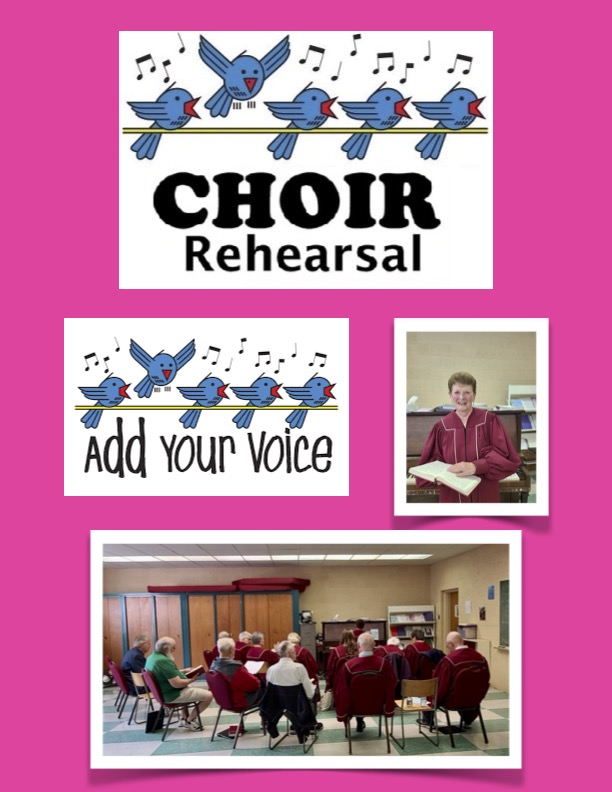
our commitment to be followers of Christ’s word and way. Our choir offers
a range of meaningful anthems that give expression to many of our
deepest hopes, emotions, and beliefs. And on special occasions, we
welcome some musical guests into our midst whose contributions feed our
spirits and touch our hearts in significant ways.
Last Sunday, we were treated to a moving duet by Zachary Boulanger and Jasmine Feicht McKim called Deep Within – which reminded us of God’s promise to plant a new and righteous spirit within us, be our strength and guide, and be with us always. And this coming Sunday, Maureen Paras and Theresa Patterson will be with us to share three moving and powerful pieces: Panis Angelicus, Pie Jesu, and Leonard Cohen’s Hallelujah. I can’t wait to hear them. “Music is a higher revelation than all wisdom and
philosophy,” Ludwig van Beethoven once stated. Please join us this coming Sunday morning eat 10:30 am for this very special service.

Ian’s Inklings – March 28, 2025

During the current season of Lent, we’re focusing on some important and interesting
stories from Luke’s gospel. Many of them, like Jesus’ parable of the “Prodigal’s Son”
that we’ll delve into this Sunday, point to the centrality of grace and forgiveness to our
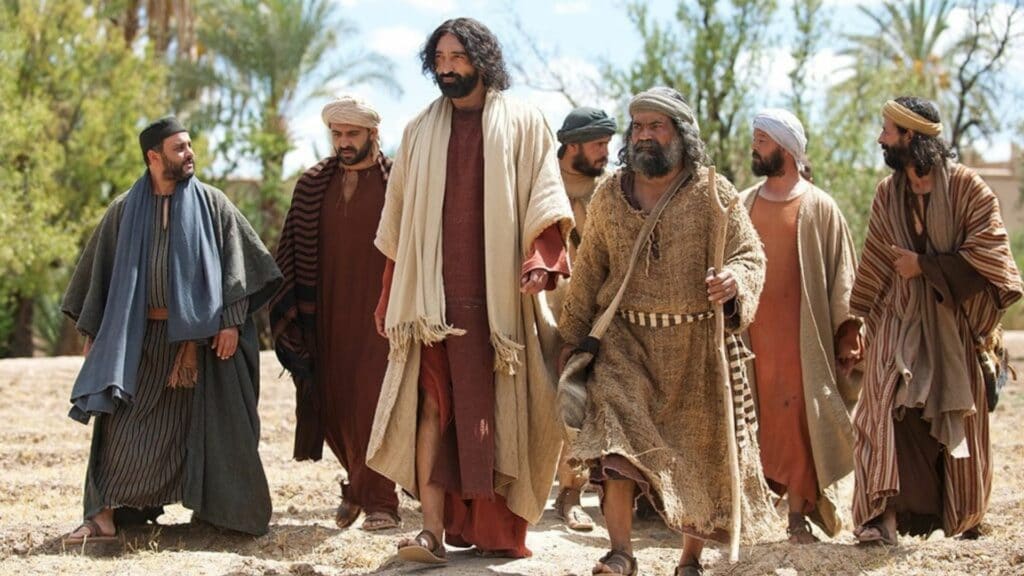
faith. But they also remind us that Jesus was constantly supported by a group of
disciples who never strayed far from his side. Of course, he taught them much. But he
also relied on them for companionship, support and assistance.

Consequently, the church has always had a strong communal element to its life and
work. After Christ’s death and resurrection, his followers continued to gather together –
and we still do. Indeed, the sense of community that many of us find in the church is
foundational to our lives. What’s more, others in our neighbourhood may also seek us
out in search of a safe and nurturing community to which they can belong. So we want
to do everything possible to keep creating a welcoming and inclusive community of faith
here at St. Mark’s.
To that end, some members of our Pastoral Care team recently discussed some new
ways that we can keep strengthening the bonds that unite us in this congregation. A
couple of important suggestions arose.

First, let’s remember to wear our name tags on Sunday mornings, both in worship and during coffee hour. Of course, not everyone likes putting them on. But it’s good to remember that it’s not always easy to put names and faces together (especially for newcomers, but even for some of the rest of us!). Calling someone by name helps to foster a sense of belonging – thriving congregations have long recognized this fact – and
therefore use name tags on a regular basis. So wearing them can help us build new
and important relationships with others, and with one another.

As well, we know that healthy communities also provide regular opportunities to celebrate special occasions. So, beginning in a month or two, we’d like to designate the last Sunday of every month as “birthday Sunday,” share a special cake after worship, and acknowledge the birthdays of all those who were born that month. To help make
this happen, we’ll soon be inviting you to indicate the month in which you were born (but
not necessarily the year!) so that all of us can celebrate this special milestone.
In these and other ways, we hope to enhance the strong sense of community that we
already enjoy The Spirit is alive and active at St. Mark’s, so let’s all do our part to keep
it moving and growing.

Ian’s Inklings – March 20, 2025

Since early January, I’ve been teaching an on-line course for Emmanuel College in Toronto on how the United Church of Canada is organized and governed. 16 students are enrolled and gather every Monday afternoon -they come from various backgrounds – and most are planning to become United Church ministers. Their first assignment was to describe and assess a visioning process that has taken place in a congregation somewhere in the country, and identify some of the insights they gained in doing this research. Their reports make for very interesting reading.

Indeed, they indicate that even some of the largest, wealthiest, and most “successful” churches in the Toronto area also are struggling with the realities of declining attendance, an aging membership base, and a dearth of young people. To be sure, there are a few exceptions – but not many. Consequently, lots of churches have been working hard to assess what they now do and chart a new course for the future that hopefully will help them remain active, relevant and faithful. And no two congregations are proceeding in quite the same way. For example, one congregation has welcomed the members of a smaller church into its midst, and has been working diligently to integrate these newcomers and make them feel truly welcome. Another church has decided to create a “Center for Human Flourishing” to try and build relationships with those who see themselves as being “spiritual but not religious.” A third congregation has hired a consulting firm from Calgary to do a full-scale review of its ministry and identify some new options for the future – while a fourth has decided to refurbish its sanctuary and replace some of the pews with chairs so that the space can be used more creatively. In these and other ways, churches all across this country are striving to reinvent themselves ways and remain relevant to the people of their communities.

Of course, we at St. Mark’s are doing that too. Indeed, we are currently engaged in our own process of discerning where the Spirit is leading us and developing several new initiatives that can help bring new life, energy and purpose to our congregation. At our March 9 annual congregational meeting, we approved an initial plan calling for the creation of a few new worship experiences and educational opportunities that hopefully will feed our souls and nourish our spirits in different ways.

Ian’s Inklings – March 14, 2025

Late Monday afternoon, I received an email with the shocking news that our Regional Minister, Rev. Kendall Harrison, died suddenly of a heart attack.  I couldn’t believe it.  As I’m a member of the Regional Pastoral Relations Committee that Kendall staffed, I’d seen him at a Zoom meeting a few weeks before, and he appeared to be as hale and hearty as ever.  So, like everyone else in the Region, I’ve been trying to process this tragic news. 

As Marilen and I were chatting about Kendall this week, she mentioned a helpful note that Rev. Kate Jones in Grand Bay-Westfield (who chairs our PR Committee) had just written.  In it, Kate noted that Kendall had an app on his phone that would send him a message every day reminding him of his mortality – that he was going to die one day – and that he should do his best to live life to the fullest and make the most of each and every day he had. 

According to his obituary, Kendall did just that. I don’t know a lot about his personal life, but I do know that he loved his job and took it seriously.  He cared deeply for the people and communities he served, and the contributions he made to the life of the United Church in New Brunswick were significant and important.  But I also know that the job he’d been doing for over 20 years was a hard one.  People – be they clergy or congregational leaders – usually only called Kendall when they needed help, when they’d run into a problem they couldn’t solve on their own, or when a crisis was brewing.  Consequently, he dealt with all kinds of stressful and very difficult situations – and took on the challenges that few of us are willing or able to handle.  But he did so willingly, faithfully, and well.

So I invite you to pray for Kendall’s family as they now walk through the valley of the shadow of death and deal with their shock and grief.   I invite you to join me in considering your own mortality and ask yourself how you can make the most of every single day.  And I also invite you to offer support to those in our community who continue to take on tasks that are difficult.  This week’s gospel reading reminds us that Jesus himself took on many challenges, and that we’re all indebted to those special individuals who follow in his footsteps and do their best to care, serve and help.

I look forward to seeing you this Sunday.

Ian’s Inklings – March 7, 2025

The season of Lent echoes the 40 days Jesus spent fasting in the desert and dealing with a variety of temptations. So it’s appropriate that the gospel reading for this First Sunday of Lent describes how He was offered all the wealth, power and immortality anyone could ever want. “The whole world can be yours, and if you worship me, it will all be yours,” the devil declared. “Just do that one thing, and you’ll have everything you could ever possibly desire.” The offer was alluring, and Jesus had to make some choices. Would he say yes, or no?

Of course, not everyone believes that an actual demonic entity exists. But all of us face temptations of various kinds – and have choices to make. To be sure, few if any of them are as consequential as the ones that Jesus faced. But the choices we make do matter.

This coming Sunday, you’ll be asked to make some choices that relate to the future of St. Mark’s United Church. Our annual congregational meeting will be held immediately following worship, and we’ll be considering a proposal to launch several new initiatives over the coming year. They’re designed to help us reach out to the community in some different ways and offer some new programs and initiatives – so your input is important. Thus I hope you’ll be present to discuss these ideas, offer your response, and help make some choices about the future direction of St. Mark’s. Afterwards, we’ll have a chance to enjoy a delicious lunch, and continue our conversations. March 9 will be an important day in the life of our congregation. I very much hope to see you this coming Sunday at 10:30 am.

Ian’s Inklings – February 28

The arrival of “Spring Break” next week offers a chance for students,
teachers and families to disengage from some of their regular routines,
relax a bit, and re-charge their batteries. Taking advantage of such
opportunities can be important – especially in challenging times such as these. It’s easy to feel anxious, exhausted and depressed by all the bad news we hear, and it’s hard not to feel overwhelmed by everything that’s happening. So breaks like this can offer us the chance to focus on other things for awhile, and restore our strength and spirits.
To this end, a host of counsellors and theologians encourage us to embrace some healthy practices that can help to reduce stress and improve our well-being.

They include:
Spending time with people who are supportive
Getting some regular exercise
Eating well
Doing what we can to get enough sleep
Engaging in activities that we enjoy
Focusing on life’s positive aspects
Taking time to pray, meditate and be still
Writing down, at the end of each day, three things for which we’re grateful

Of course, each of us will have more need for some of these practices than others. But regardless of our situation or circumstance, disengaging from life’s trials, pressures and concerns for awhile can be helpful. Indeed, even Jesus did this. The gospels repeatedly tell us that, after periods of intense activity, Jesus regularly went off to quiet and secluded
places with his disciples to rest, re-charge and pray. This week’s gospel reading tells of one such occasion – and suggests that it’s at times such as these that God can be present in powerful and even life-changing ways to restore, strengthen and empower us all. So we’ll be focusing on the story of Jesus “transfiguration,” and on the gifts of the Spirit we are offered.
I look forward to seeing you this Sunday at 10:30 am.

Ian’s Inklings – February 20

Occasionally I come across a Biblical text that I really don’t want to preach on.  And this week’s suggested reading from Luke’s gospel is one such passage.  “I say to you, Love your enemies, do good to those who hate you, bless those who curse you, and pray for those who abuse you,” Jesus said.  “If anyone strikes you on the cheek, offer the other also; and from anyone who takes away your coat do not withhold even your shirt… Do to others as you would have them do to you.”  

To say the least, I find these to be challenging words, even at the best of times – and these are hardly “the best of times.”  Donald Trump’s plans to impose strict tariffs on all Canadian goods entering the U.S. and to try to turn Canada into “the 51st State” threaten our economy, our values, and our independence. 

Consequently, many of us are coming to view the United States as an “enemy” that “hates” us.  So we’ve become angry.  We feel threatened.  And we’re fighting back.

Given our situation, Jesus’ words seem strange and perhaps even dangerous.  Therefore I’ve been sorely tempted to ignore them and find another text that seems more suitable (the story of David killing Goliath, perhaps?)  But one of the reasons preachers like me follow the Revised Common Lectionary (a three-year cycle of Biblical texts for every Sunday) is that doing so forces us to wrestle with texts we’d rather avoid.  So that’s what we’re going to do this coming Sunday.  What did Jesus mean when he said “love your enemies” and “do good to those who hate you?”  Can these challenging words help us navigate the turbulent waters we now find ourselves in? And if so, how?

I look forward to seeing you this coming Sunday morning at 10:30 am. 

Ian’s Inklings – February 14

According to the Cambridge Dictionary, Valentine’s Day is the occasion
“when people give small presents, chocolate candy, flowers, or cards to
someone they admire or love.” Over the years, it’s become a major
commercial occasion. Every year, merchandise sales and restaurant
reservations shoot through the roof as we strive to find meaningful and
appropriate gifts for those special people in our lives who we love.
But you may be surprised to learn that the person for whom the day is
named – Valentine – was not known for being a romantic. Rather, it was his
love of God that set him apart, and that eventually caused the church to
canonize him as a saint.

Indeed, the Valentine who inspired this special day was a 3rd-century
Christian priest who lived at a time when the Roman Empire ruled the
Mediterranean world. Like everyone who lived under the imperial yoke, he
was expected to demonstrate his loyalty to the Emperor by offering regular
sacrifices to the many gods who the Romans worshipped. But he refused
to do so. Valentine said that, as a follower of Jesus, he’d only worship the
Christian God and would never pay homage to any other deity. In the eyes of Rome this made Valentine a traitor – so he was arrested, convicted, andexecuted on February 14.

Over time, other stories about Valentine began to spread. According to one legend, Valentine became close to his jailor, who eventually asked him to prove Christ’s power by healing his blind daughter. Valentine did so – the jailor and his family then converted to Christianity – and just before he was
executed, he wrote a note to the daughter, which he signed, “your Valentine.” Hence the tradition of Valentine’s cards.

Other stories connected him more directly with romantic love. Valentine had apparently been marrying soldiers and their lovers at a time when the Roman Emperor had banned marriage for young men, believing that unmarried soldiers made better fighters. Valentine’s decision to perform
these marriages in secret was seen as an act of defiance against the Emperor’s edict. But it did much to seal his reputation as someone who fostered and encouraged loving relationships.

Truth be told, it’s difficult to separate fact from fiction when it comes to Saint Valentine. But what is clear is that his heart was filled with a special and powerful type of love that was focused on worshipping God and caring for those who he encountered. It’s the type of love Jesus describes in his famous “sermon on the plain” that we’ll focus on this Sunday. And it’s the love that we are invited to share with one another and the world.
P.S. A reminder that the deadline for submissions to the UCW’s book of
“Mothers Stories” is this Sunday, February 16. It’s a great way to
remember and give thanks for the love given by a mother, or by someone
who was as a mother to us.

Ian’s Inklings – February 6

In a recent Facebook post, former United Church Moderator Richard Bott

perceptively summarizes how President Donald Trump is working “to
consolidate the authority and power of their three branches of government
into the Executive branch – and into the person of himself.” He’s doing so in
many ways, including:

  • Granting special favours to media outlets and personalities who support his policies
  • Pardoning his supporters who illegally stormed the Capital building early in
    2021
  • Requiring public servant to pledge their loyalty to him rather than to the
    U.S. constitution
  • Deciding that two of his country’s closest economic partners and allies,
    Canada and Mexico, are now America’s enemies.
    In these and other ways, President Trump is working “to inflame U.S.
    citizens, to make them believe that they are under attack, and that any pain
    they have to endure will only be short-term, and will ‘Make America Great
    Again.’”
    Because of these and other recent initiatives, Richard admits that “I am
    afraid.”
    He asks: “How long until the American flag flies on Canadian
    territory, not as a salute to our neighbourly connection, but as obedience
    and obeisance to empire?”
    He also wonders: “With all of the destructive
    power that is held in that one man’s hands, what will the world look like by
    the time he leaves this mortal coil?”
    I don’t know about you, but I too have
    these questions. I too fear for our future.
    Of course, fear isn’t new. Indeed, one of Jesus’ most frequent messages to
    his friends and followers was: “be not afraid.” And the lectionary reading
    for this coming Sunday describes a time when Jesus shared these
    important words with a fisherman named Simon. So this week we’ll talk
    about the relationship between fear and faith, and explore how the
    guidance that Jesus offered Simon can also give us courage, wisdom and
    hope. It’s a powerful and pertinent story, so I hope you’ll join us in worship
    on Sunday at 10:30 a.m. I look forward to seeing you then.

Blog at WordPress.com.

Up ↑